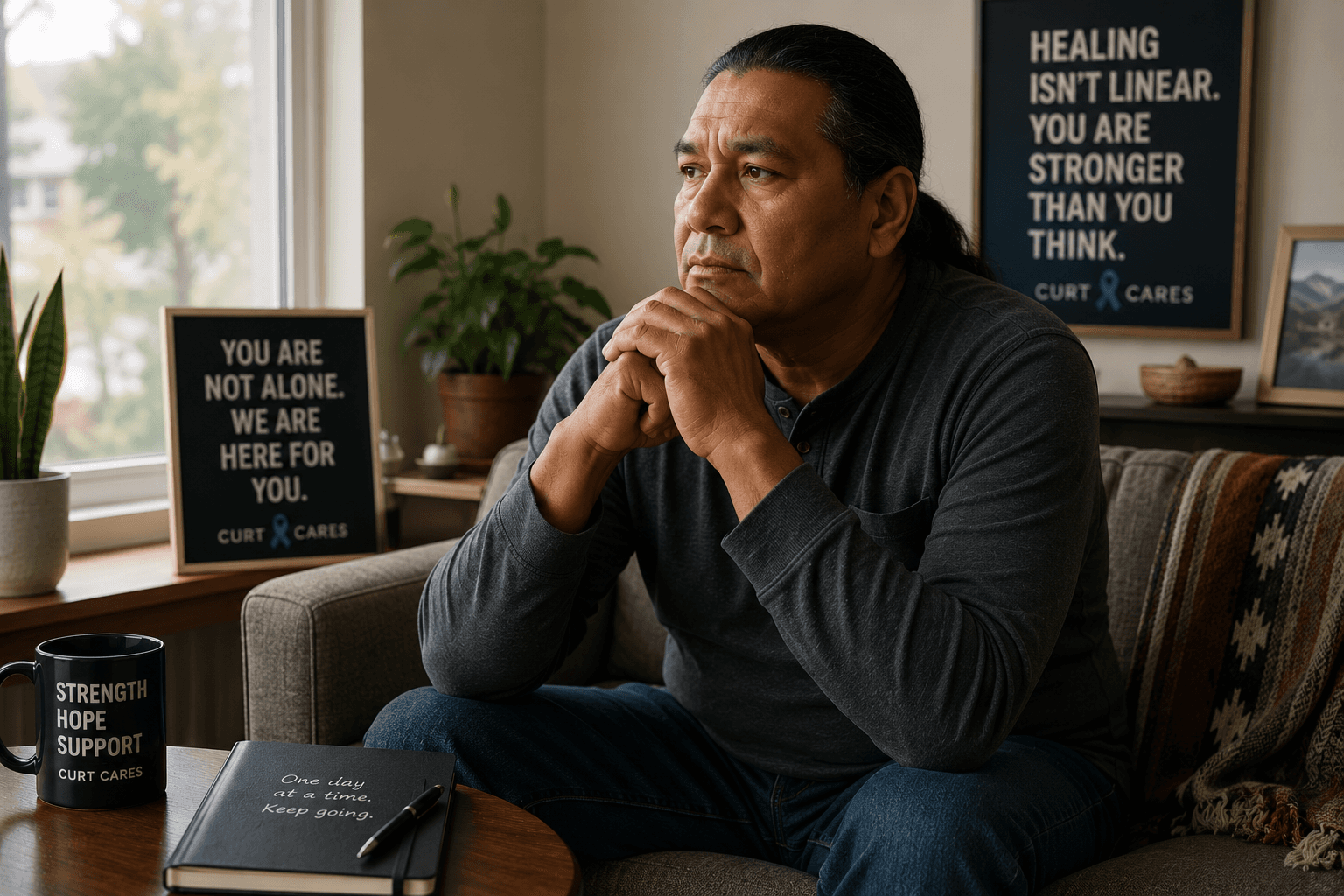
Emotional Recovery
Prostate cancer does not only affect the body. It can also affect a man’s peace of mind, confidence, relationships, and emotional well-being in ways that are easy to overlook and hard to talk about. For many survivors, the emotional side of recovery can be just as challenging as the physical side—sometimes even more so.
A diagnosis can bring fear, uncertainty, anger, sadness, or a deep sense of vulnerability. Treatment can add new layers of stress, including concerns about side effects, changes in identity, financial pressure, and the burden of trying to stay strong for everyone else. Even after treatment ends, many men continue to carry anxiety about test results, fear of recurrence, frustration with recovery, or the quiet weight of feeling like life has changed in ways other people cannot fully see.
At Curt Cares, we believe emotional recovery deserves the same attention as physical healing. Men are often taught to push through, stay quiet, and keep moving. But survivorship is not strengthened by silence. Real healing begins when survivors feel permission to speak honestly about what they are carrying—whether that is fear, sadness, isolation, exhaustion, or simply the pressure of trying to hold everything together.
Emotional recovery does not look the same for every man. Some survivors may feel overwhelmed at the beginning of the journey. Others may not feel the emotional impact until months later, when treatment is over and the support around them begins to fade. Some men may struggle with depression, irritability, sleep disruption, or a loss of motivation. Others may feel disconnected from themselves, from their spouse, or from the life they had before diagnosis.
None of that means a survivor is weak. It means he is human.
This part of survivorship is about making space for the emotional realities of prostate cancer and reminding men that support is available. Emotional healing may include counseling, prayer, honest conversations, support groups, trusted friendships, better coping tools, or simply hearing someone say, “What you’re feeling matters.” The goal is not to pretend everything is fine. The goal is to help survivors process what they’ve been through and move forward with greater clarity, strength, and support.
Curt Cares exists to help men and families understand that survivorship is not just about getting past cancer. It is about learning how to live through the physical, emotional, relational, and spiritual impact of it—and finding hope on the other side.
Key Challenge
What this area covers
Emotional recovery focuses on the mental and emotional impact of prostate cancer survivorship. This area is designed to help survivors, caregivers, and families recognize the emotional challenges that can come with diagnosis, treatment, recovery, and life after treatment.
Topics may include:
fear of recurrence or fear of the unknown
anxiety before appointments, scans, or PSA tests
depression, sadness, irritability, or emotional exhaustion
grief over physical changes, intimacy changes, or loss of normalcy
stress, isolation, and the pressure to “stay strong”
mental health support, counseling, and coping tools
faith, encouragement, and trusted support systems
how to start honest conversations about emotional well-being
Emotional recovery is not separate from survivorship—it is a central part of it. Men deserve space to process what they are carrying, and families deserve tools to better understand how to support them through it.
Practical next steps
Pay attention to emotional changes that do not seem to go away, including ongoing anxiety, sadness, irritability, sleep disruption, or loss of motivation.
Give yourself permission to talk honestly with someone you trust—a spouse, friend, pastor, counselor, doctor, or fellow survivor.
Ask your healthcare provider whether emotional support services, counseling, or mental health referrals are available for cancer survivors.
Create space for recovery beyond appointments by building small routines that support peace, reflection, prayer, movement, and rest.
If PSA tests, follow-up appointments, or scans trigger anxiety, acknowledge that openly and prepare for those moments with support rather than silence.
Let family members know what kind of support actually helps—whether that is listening, checking in, praying with you, or simply giving you room to process.
If emotional distress begins affecting work, relationships, sleep, or daily functioning, seek professional support sooner rather than later.
Questions to ask
Is what I’m feeling emotionally common for prostate cancer survivors?
How do I know when stress, fear, or sadness has become something I need help addressing?
Are there counseling, support group, or mental health resources available for survivors or caregivers?
What can I do when fear of recurrence or anxiety before appointments feels overwhelming?
How do I talk to my spouse, family, or children about what I’m feeling without feeling like a burden?
What coping tools have helped other survivors navigate the emotional side of recovery?
Are there faith-based, community-based, or virtual support options available if I am not ready for formal counseling?
What should I do if I feel emotionally stuck even though treatment has ended?